
Age-Related Macular Degeneration: Protecting Your Central Vision
The macula is the tiny part of the retina responsible for the sharp, central vision you use to read faces and words. Age-related changes to it are a leading cause of vision loss after 60 — and early detection helps.
S By Dr. Shetal Mahendrasinh Raj
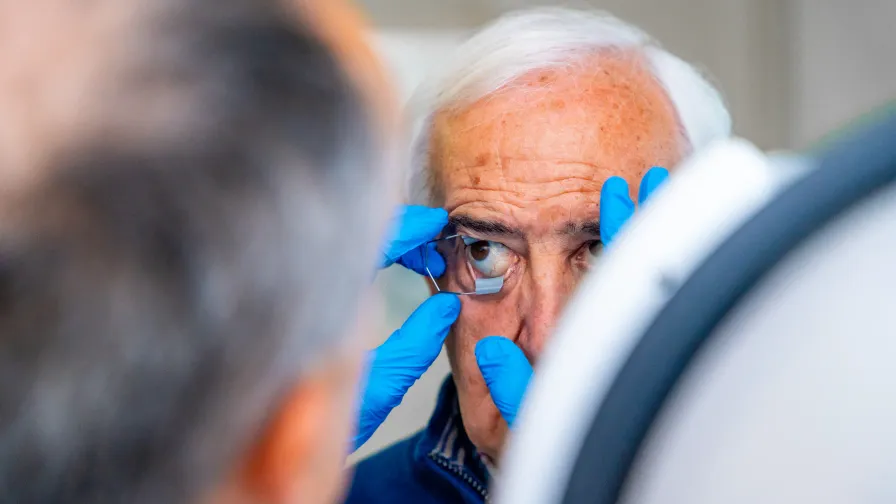
When you read a word, recognise a face or thread a needle, you’re using a tiny, remarkable spot at the centre of your retina called the macula. Age-related macular degeneration (AMD) is a gradual damage to this area, and it’s one of the leading causes of central vision loss in people over 60.
What AMD does to vision
AMD affects your central vision while usually sparing the side (peripheral) vision. People may notice:
- Blurring or a blank/grey patch in the centre of their sight
- Straight lines looking wavy or bent — a doorframe or the edge of a page appearing distorted
- Difficulty reading or recognising faces, needing more light
- Colours seeming less vivid
Because the changes can be slow and one eye can compensate for the other, AMD is often noticed late — which is why awareness matters.
Who is more at risk
- Age over 60
- Smoking (a strong, modifiable risk factor)
- Family history of AMD
- High blood pressure and poor diet
A simple home check: the Amsler grid
An Amsler grid is a simple square of lines you can look at, one eye at a time. If the lines appear wavy, broken or a patch seems missing, it’s a reason to get checked promptly. It’s a useful early-warning tool for anyone at risk.
Why early detection helps
Some forms of AMD respond to treatment — and outcomes are far better when it’s caught early. Others are managed by slowing progression through lifestyle and, in some cases, specific supplements advised by your doctor. Either way, a dilated retina examination is how AMD is properly diagnosed. Read about our retina and macula care here.
The macula is small, but it does the most important seeing you do. A little vigilance protects a lot of life.
This article is general information, not a substitute for a personal consultation. If you have concerns about your eyes, please get in touch.
Have a question about your eyes?
A short conversation is often all it takes. We’re happy to help.
Book Appointment