
Sitting Too Close to the TV? Signs of Vision Problems in Children
Children rarely say "I can't see well" — because they don't know what normal vision looks like. Parents are often the first to spot the quiet signs, and early detection can protect a child's sight for life.
S By Dr. Shetal Mahendrasinh Raj
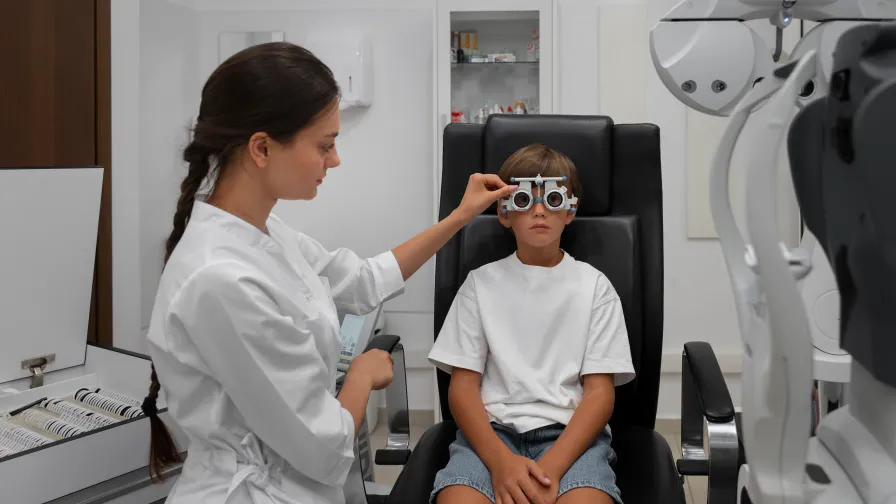
Children almost never complain that their vision is poor — for the simple reason that they have nothing to compare it with. To a child, blurry is normal. That’s why parents and teachers are usually the first to notice something isn’t right, and why paying attention early matters so much.
Signs worth watching for
Consider an eye check if your child regularly:
- Sits very close to the television or holds books and screens close to the face
- Squints or screws up the eyes to see distant things
- Tilts or turns the head to look at things
- Rubs the eyes often, or complains of tired eyes or headaches
- Has one eye that drifts inward or outward
- Blinks excessively, or has red, watery eyes
- Is struggling at school or losing interest in reading
Why early matters more in children
A child’s visual system is still developing. If one eye sees poorly and the problem isn’t corrected in time, the brain can begin to ignore that eye — a condition called amblyopia, or “lazy eye.” Caught early, it’s very treatable with glasses, patching or other simple measures. Left too late, the vision loss can become permanent.
This is why we recommend not waiting: many issues that are easy to fix at age 4 or 6 are far harder to address at 12.
A gentle, child-friendly check
A children’s eye examination is unhurried and reassuring — we can assess vision even in little ones who can’t yet read letters. You can read about our care for children and infants here.
A child won’t tell you the world looks blurry. They’ll just quietly assume that’s how the world looks. Your attention is their best early warning.
If anything on this list sounds familiar, a simple check-up is a small step that can shape how your child sees for the rest of their life.
This article is general information, not a substitute for a personal consultation. If you have concerns about your child’s eyes, please get in touch.
Have a question about your eyes?
A short conversation is often all it takes. We’re happy to help.
Book Appointment