
What Actually Happens During a Comprehensive Eye Examination
A proper eye check is far more than reading letters off a chart. Here's what a comprehensive examination looks at — and why it can reveal problems long before you'd ever feel them.
S By Dr. Shetal Mahendrasinh Raj
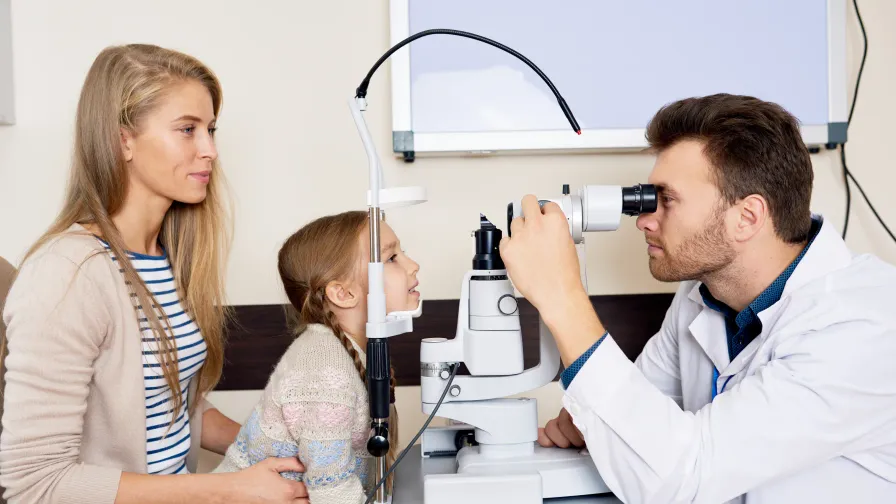
Many people think an eye test means reading letters off a chart and walking out with a spectacle number. A comprehensive eye examination is much more than that — it’s a full health check of your eyes, and often the first place a wider health problem is spotted.
Here’s what a thorough examination typically includes.
1. Your history and vision
We start by understanding your symptoms, your general health, your medications and any family history of eye disease. Then we measure your visual acuity — how clearly you see — with and without correction.
2. Refraction — your spectacle number
This is where we fine-tune the exact lens power that gives you your sharpest, most comfortable vision. It’s also how we detect short-sightedness, long-sightedness, astigmatism and the age-related change called presbyopia.
3. Eye pressure
A quick, painless check of the pressure inside the eye is an important screen for glaucoma — a condition that can steal sight silently. Read more about glaucoma here.
4. Examination of the front of the eye
Using a microscope called a slit lamp, we examine the cornea, lens and other front structures — checking for cataract, dry eye, and other conditions.
5. The dilated retina check
Often the most valuable part. Dilating drops widen your pupil so we can examine the retina and optic nerve at the back of the eye. This is how we detect diabetic changes, macular degeneration, retinal weaknesses and more — usually before you’d notice anything yourself. Your vision may stay blurry for a few hours afterwards, so it helps to bring sunglasses and avoid driving straight after.
Why it matters even if you see fine
Many serious eye conditions cause no symptoms early on. A comprehensive examination is designed to find them at that silent, treatable stage. You can read more about our eye examination service here.
An eye examination isn’t about proving something is wrong — it’s about making sure everything is right, and catching the exceptions early.
This article is general information, not a substitute for a personal consultation. If you have concerns about your eyes, please get in touch.
Have a question about your eyes?
A short conversation is often all it takes. We’re happy to help.
Book Appointment